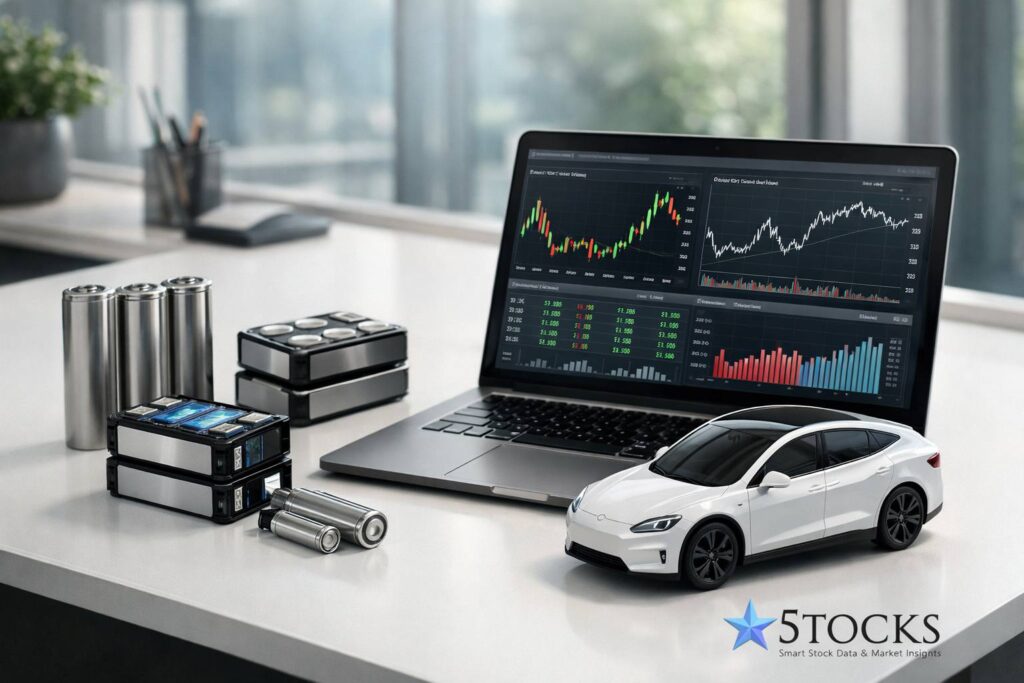
Lithium has quickly become one of the most important resources in the global energy transition. As electric vehicles, renewable power systems, and battery storage technologies expand, demand for lithium continues to rise at a rapid pace. What was once a niche industrial metal is now a strategic material closely watched by governments, manufacturers, and investors worldwide.
For market participants, lithium is no longer just a commodity story. It represents a long-term structural shift driven by electrification, clean energy policies, and the global move away from fossil fuels. Companies involved in lithium mining, processing, and battery supply chains are seeing increased attention as industries compete to secure stable supply.
This analysis focuses on understanding the evolving lithium market from a long-term investment perspective. Instead of short-term hype, the objective is to evaluate demand trends, industry fundamentals, leading companies, and the risks associated with a fast-growing but cyclical sector. Investors looking for broader market research and sector insights can explore additional analysis available on 5StarsStocks.com.
Lithium is a key material used in electric vehicle batteries and large-scale energy storage systems. As global demand for clean energy and EV adoption grows, lithium has become an important focus for investors. The 5StarsStocks.com lithium analysis examines market trends, leading producers, and the long-term growth outlook driven by the global shift toward electrification.
Why Lithium Demand Is Rising Globally
The growing importance of lithium is directly linked to major structural changes in the global energy and transportation sectors. Several powerful trends are driving long-term demand growth.
Electric Vehicle Expansion
The largest demand driver for lithium is the rapid adoption of electric vehicles. Lithium-ion batteries are currently the dominant technology used in EVs because of their high energy density, long life cycle, and efficiency. As automakers increase production and governments push for lower emissions, battery demand continues to accelerate.
Major economies including the United States, Europe, and China have introduced policies, tax incentives, and emission targets that support large-scale EV adoption. As a result, battery manufacturing capacity is expanding globally, increasing the need for reliable lithium supply.
Growth of Energy Storage Systems
Renewable energy sources such as solar and wind are intermittent, meaning they do not produce power consistently throughout the day. Large-scale battery storage systems help stabilize electricity grids by storing excess energy and releasing it when needed.
Lithium-ion technology has become the preferred solution for grid storage projects due to its efficiency and declining costs. As countries invest more in renewable infrastructure, demand for lithium in stationary storage applications is expected to grow alongside the EV sector.
Government Policies and Energy Transition Goals
Many governments have announced long-term net-zero emission targets. Achieving these goals requires electrification of transportation, expansion of renewable energy, and modernization of power infrastructure. All of these initiatives depend heavily on battery technology, which keeps lithium at the center of the clean energy supply chain.
Strategic concerns about supply security have also led countries to support domestic mining projects and battery manufacturing, further strengthening the long-term demand outlook.
Long-Term Demand Outlook
Industry forecasts suggest lithium demand could multiply several times by the end of the decade. While short-term price cycles are common, the underlying growth trend remains supported by structural changes in transportation, energy production, and industrial electrification.
For investors and market observers, this combination of policy support, industrial demand, and technological dependence explains why lithium has become one of the most closely followed segments within the broader battery metals market.
Lithium Market Overview and Price Trends
The lithium market has experienced significant volatility over the past few years, reflecting the challenges of balancing rapid demand growth with limited supply expansion. Unlike traditional commodities, lithium production cannot be increased quickly, as new mining and processing projects require years of development, regulatory approval, and infrastructure investment.
Supply and Demand Imbalance
Demand for lithium has grown faster than the industry initially expected, primarily due to the surge in electric vehicle production. While mining companies have announced new projects, bringing additional supply online takes time. This delay has created periods of tight supply, leading to sharp price increases.
At the same time, the lithium market remains relatively small compared to other industrial metals. Even minor disruptions in production, logistics, or refining capacity can influence prices significantly.
Recent Price Volatility
Lithium prices saw a strong rally during the peak of EV expansion as battery manufacturers competed to secure raw materials. However, like most cyclical industries, the market later experienced a correction as supply expectations improved and short-term demand slowed in some regions.
This price volatility highlights an important reality for investors. Lithium is part of a long-term growth story, but it also moves through cycles influenced by inventory levels, project timelines, and changes in global economic conditions.
Long-Term Price Outlook
Despite short-term fluctuations, the long-term outlook remains supported by structural demand. Analysts expect continued investment in new mining capacity, but demand from EVs and energy storage is projected to grow steadily throughout the decade.
For long-term market participants, the key factor is not short-term price movement but the broader trend of electrification and battery expansion, which continues to support the lithium industry’s strategic importance.
Top Lithium Companies to Watch (5StarsStocks.com Analysis)
The lithium industry is led by a relatively small group of producers that control a large portion of global supply. These companies operate across mining, refining, and chemical processing, making them critical players in the battery materials supply chain.
Top Lithium Companies to Watch
- Albemarle Corporation
One of the world’s largest lithium producers, Albemarle operates major projects in the United States, Chile, and Australia. The company benefits from long-term supply agreements with battery manufacturers and strong global demand exposure. - SQM (Sociedad Química y Minera de Chile)
SQM is a major lithium supplier with operations in Chile’s high-grade brine resources. Its low production costs and large reserves position the company as a key long-term player in the market. - Lithium Americas
This company focuses on large-scale development projects in North and South America. Its growth potential is tied to bringing new production capacity online to meet rising demand. - Livent Corporation
Livent specializes in lithium chemicals used in advanced battery applications. The company’s focus on high-performance materials makes it an important supplier for EV manufacturers. - Pilbara Minerals
Based in Australia, Pilbara is one of the leading producers of hard-rock lithium. The company has expanded production to support growing demand from Asian battery manufacturers.
Industry Positioning Insight
These companies represent different segments of the lithium supply chain, from low-cost brine extraction to hard-rock mining and advanced chemical processing. Their performance is closely tied to lithium prices, production growth, and long-term contracts with battery and automotive manufacturers.
From the 5StarsStocks.com lithium perspective, established producers with scalable operations and strong supply agreements tend to be better positioned to navigate price cycles while benefiting from long-term demand growth.
Key Factors Driving Lithium Stocks Performance
Lithium stocks are influenced by a combination of industry trends, commodity pricing, and broader market conditions. While long-term demand supports the sector, company performance often depends on several key drivers that investors and market analysts closely monitor.
Electric Vehicle Production Growth
The most important factor affecting lithium companies is the pace of electric vehicle production. As automakers increase EV output, battery manufacturers require larger volumes of lithium chemicals. Any acceleration or slowdown in EV sales can directly impact lithium demand expectations and, in turn, stock performance.
Major automotive investments in electrification, new battery factories, and long-term supply agreements generally signal positive momentum for the lithium industry.
Lithium Price Movements
Lithium producers are highly sensitive to price changes. When lithium prices rise, revenue and profit margins for mining companies typically improve. However, price declines can quickly pressure earnings, especially for companies with higher production costs.
Because lithium markets can move in cycles, stock prices often react not only to current prices but also to future supply and demand expectations.
Production Expansion and Project Development
Growth in the lithium sector depends on the ability of companies to increase output. New mining projects, capacity expansions, and improved processing technology can significantly influence long-term valuation.
Companies that successfully bring new production online while controlling costs are generally viewed more favorably by the market.
Government Support and Industrial Policy
Government policies play an increasingly important role in the lithium industry. Incentives for domestic battery production, supply chain security programs, and clean energy funding can benefit producers operating in strategic regions.
In the United States and other major economies, efforts to reduce reliance on foreign supply chains have increased support for local lithium projects and processing facilities.
Risks and Challenges in Lithium Investment
While the long-term outlook for lithium remains strong, the sector also carries several risks that investors should consider. Understanding these challenges is important for evaluating the sustainability of growth and managing expectations during market cycles.
Commodity Price Cycles
Lithium is a cyclical commodity, and prices can fluctuate significantly based on supply expansion, inventory levels, and short-term demand changes. Periods of rapid price growth are often followed by corrections as new production enters the market.
These cycles can create volatility in lithium company earnings and stock performance.
Oversupply Risk
As demand projections have increased, many companies have announced new mining projects. If too much production capacity comes online at the same time, the market could shift into oversupply, putting downward pressure on prices.
Project delays, cost overruns, or slower-than-expected EV growth can also affect the balance between supply and demand.
Environmental and Regulatory Concerns
Lithium extraction, particularly from brine resources and hard-rock mining, requires significant water use and land development. Environmental regulations, community opposition, or permitting delays can slow project timelines and increase operational costs.
Companies operating in regions with strict environmental standards may face additional compliance requirements.
Geopolitical and Supply Chain Risks
A large portion of global lithium production and processing is concentrated in a limited number of countries. Trade restrictions, political instability, or changes in resource policies can affect global supply availability and pricing.
Efforts to diversify supply chains are ongoing, but geographic concentration remains a structural risk for the industry.
Long-Term Outlook for the Lithium Industry
The long-term outlook for lithium remains closely tied to the global transition toward electrification and clean energy. As industries move away from fossil fuels, lithium is expected to remain a critical component in battery technology for transportation, power storage, and consumer electronics.
Demand Growth Through 2030
Industry projections suggest that lithium demand could grow several times over by the end of the decade. Electric vehicles are expected to account for the majority of this growth, followed by grid-scale energy storage and industrial battery applications.
Automakers are investing heavily in battery production facilities, while governments continue to introduce policies aimed at reducing carbon emissions. These long-term commitments provide structural support for lithium consumption.
Expansion of Global Supply
To meet rising demand, mining companies are developing new projects across North America, South America, Australia, and parts of Africa. At the same time, investment in lithium refining and processing capacity is increasing, particularly in regions aiming to strengthen domestic supply chains.
While supply expansion may create short-term price pressure, it also supports the long-term stability of the industry.
Strategic Importance in the Energy Transition
Lithium is now considered a strategic resource for energy security. Countries are working to secure reliable access through domestic production, international partnerships, and long-term supply agreements.
From the 5StarsStocks.com lithium perspective, this growing strategic importance reinforces the sector’s long-term relevance, even as short-term market cycles continue.
How Investors Can Approach Lithium
Lithium offers exposure to one of the fastest-growing segments of the global materials market, but a balanced approach is important due to the sector’s cyclical nature.
Diversification Within the Sector
Instead of focusing on a single company, some investors follow a diversified approach by gaining exposure to multiple producers or different parts of the supply chain. This helps reduce company-specific risk while maintaining exposure to industry growth.
Individual Stocks vs ETFs
Investors typically choose between individual lithium producers or exchange-traded funds that track a basket of battery material and mining companies. ETFs provide broader exposure, while individual stocks may offer higher growth potential along with greater volatility.
Long-Term Perspective
Because lithium prices and related stocks can experience sharp short-term movements, many market participants focus on long-term industry trends rather than short-term price changes. The structural growth driven by electrification and energy storage is generally viewed as the primary investment thesis.
This section is informational only and does not represent financial advice. Market conditions, risk tolerance, and individual research should always be considered before making investment decisions.
Conclusion
Lithium has moved from a specialized industrial material to a central component of the global energy transition. The rapid growth of electric vehicles, renewable power systems, and battery storage has positioned the lithium industry as one of the most important segments within the broader clean energy economy.
The 5StarsStocks.com lithium analysis highlights a market supported by strong long-term demand, expanding industrial investment, and increasing strategic importance. At the same time, the sector remains influenced by commodity price cycles, supply expansion, and regulatory challenges.
For market observers and investors, the lithium industry represents a long-term growth opportunity that requires a balanced perspective. Understanding both the potential and the risks is essential for navigating a sector that is expected to play a key role in the future of energy and transportation.
FAQ Section
Is lithium a good long-term investment?
Lithium has strong long-term potential due to growing demand from electric vehicles and energy storage systems. However, the market is cyclical and prices can be volatile. Investors often focus on long-term industry trends rather than short-term price movements.
Which companies are major lithium producers?
Some of the leading lithium producers include Albemarle, SQM, Pilbara Minerals, Lithium Americas, and Livent. These companies operate large-scale mining and processing facilities that supply materials for battery manufacturing.
Why are lithium prices so volatile?
Lithium prices fluctuate due to changes in supply expansion, EV demand, inventory levels, and new project timelines. Because the market is relatively small, even minor shifts in supply or demand can impact pricing.
How does electric vehicle growth affect lithium demand?
Electric vehicles rely on lithium-ion batteries, making EV production the primary driver of global lithium demand. As automakers expand EV manufacturing, the need for lithium continues to increase.
What are the main risks in lithium investing?
Key risks include commodity price cycles, potential oversupply, environmental regulations, project delays, and geopolitical factors that may affect global production and supply chains.

